Current signals under review
What the desk is tracking now.
Each is a real, records-based signal in source-review. Full briefs publish only as each clears review; the tailored read is available privately by request.
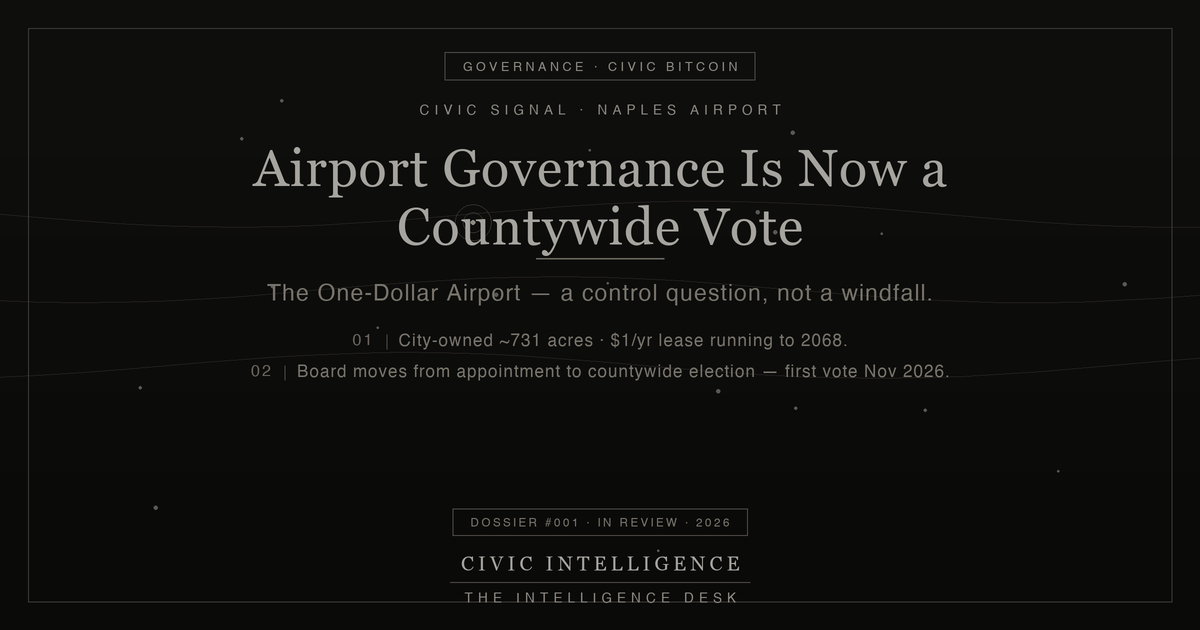
1 · The One-Dollar Airport
A control question, not a windfall.
What changedA 2026 state law (CS/HB 4005) moved the Naples Airport Authority board from city-council appointment to countywide election — first vote November 2026. The City and the Authority are in litigation and a state conflict-resolution process. The field is the city's largest landholding, held on a one-dollar, 99-year lease running to 2068.
Why it mattersWhoever governs the field after November governs the commercial-service question, the curfew, and the noise regime. Commercial airline service is not approved — only a letter of intent under due-diligence review.
Who should careOwners near the airport edge; downtown hospitality; capital reading close-in land; civic principals.
Private usePosition around the edge and the public-trust transition; read who is likely to govern the post-November board.
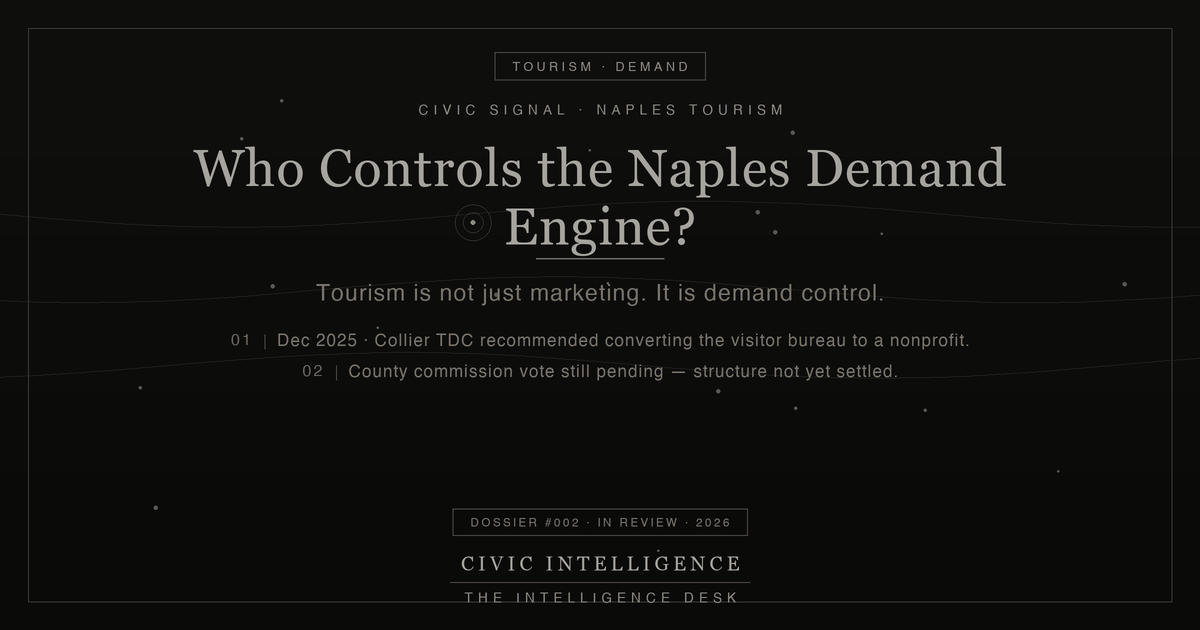
2 · Who Controls the Naples Demand Engine?
The visitor economy has a governance layer most people never see.
What changedIn December 2025 the Collier Tourist Development Council recommended converting the county's visitor-marketing body to a private nonprofit. The county commission's decision is pending — so "privatization" is a watchlist, not a settled fact.
Why it mattersWho governs tourism marketing shapes premium visitor demand, the season, and the narrative that fills rooms and tables.
Who should careHospitality operators; private clubs; downtown; luxury and premium demand.
Private useRead the governance shift before it settles; position for who shapes the demand narrative next.
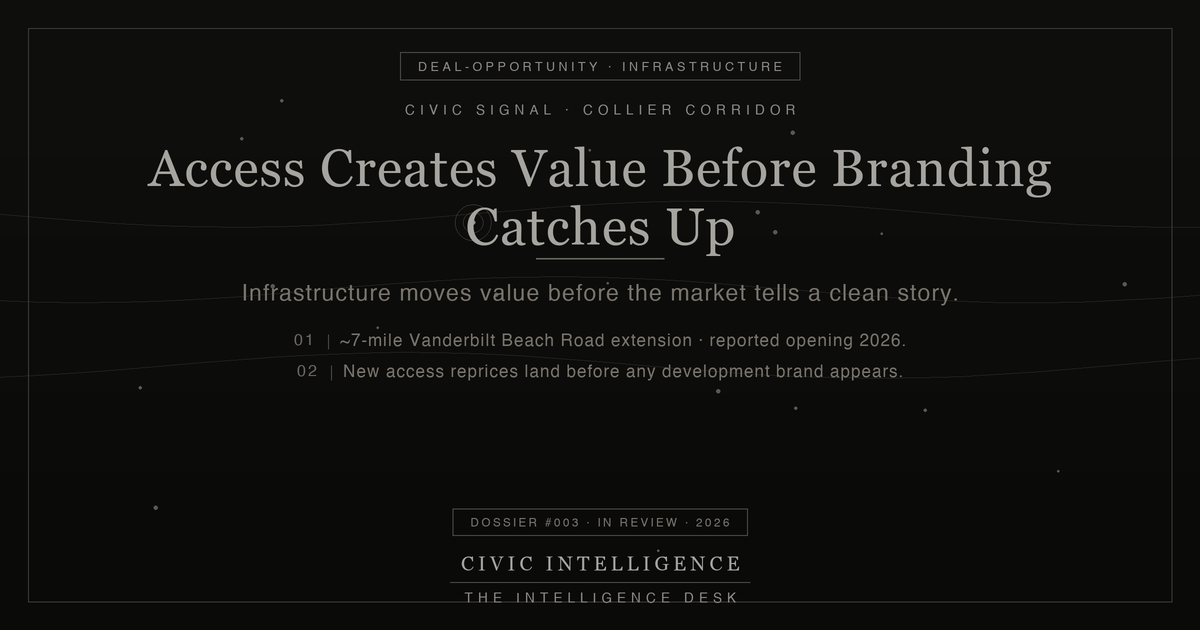
3 · Access Creates Value Before Branding Catches Up
Infrastructure reprices land long before any sign goes up.
What changedA roughly seven-mile Collier County road extension (Vanderbilt Beach Road) is reported opening in 2026, opening a new growth corridor.
Why it mattersNew access shifts demand and reprices land ahead of branding — the early read is the advantage.
Who should careDevelopers; capital allocators; corridor property owners.
Private useA corridor read — where access reprices value first, and who is positioned for it.
4 · Bitcoin Urbanism and the Large-Load Question
Energy policy is quietly repricing which places can host the future.
What changedFlorida enacted a 2026 law (SB 484) and the Public Service Commission approved a large-load tariff structure requiring very large electricity users — data centers and other large loads — to pay for the generation they require.
Why it mattersWhere large loads can affordably site changes a town's balance sheet — energy, property, and resilience. Proof over promise.
Who should careEnergy, mining, and infrastructure operators; capital; civic energy planners.
Private useA doctrine read on what towns and capital should price in on large-load energy.
5 · Information Only Matters If It Changes Action
The operating principle behind the desk — not an event.
What changedNothing — this is the standard, not a signal. It governs every brief the desk produces.
Why it mattersA brief that doesn't change a decision is trivia. Every artifact ends in a move: what to watch, what to verify, what to do, or what to decline.
Who should careAnyone making decisions on incomplete public information.
Private useThe bar every private read is held to before it reaches a principal.